
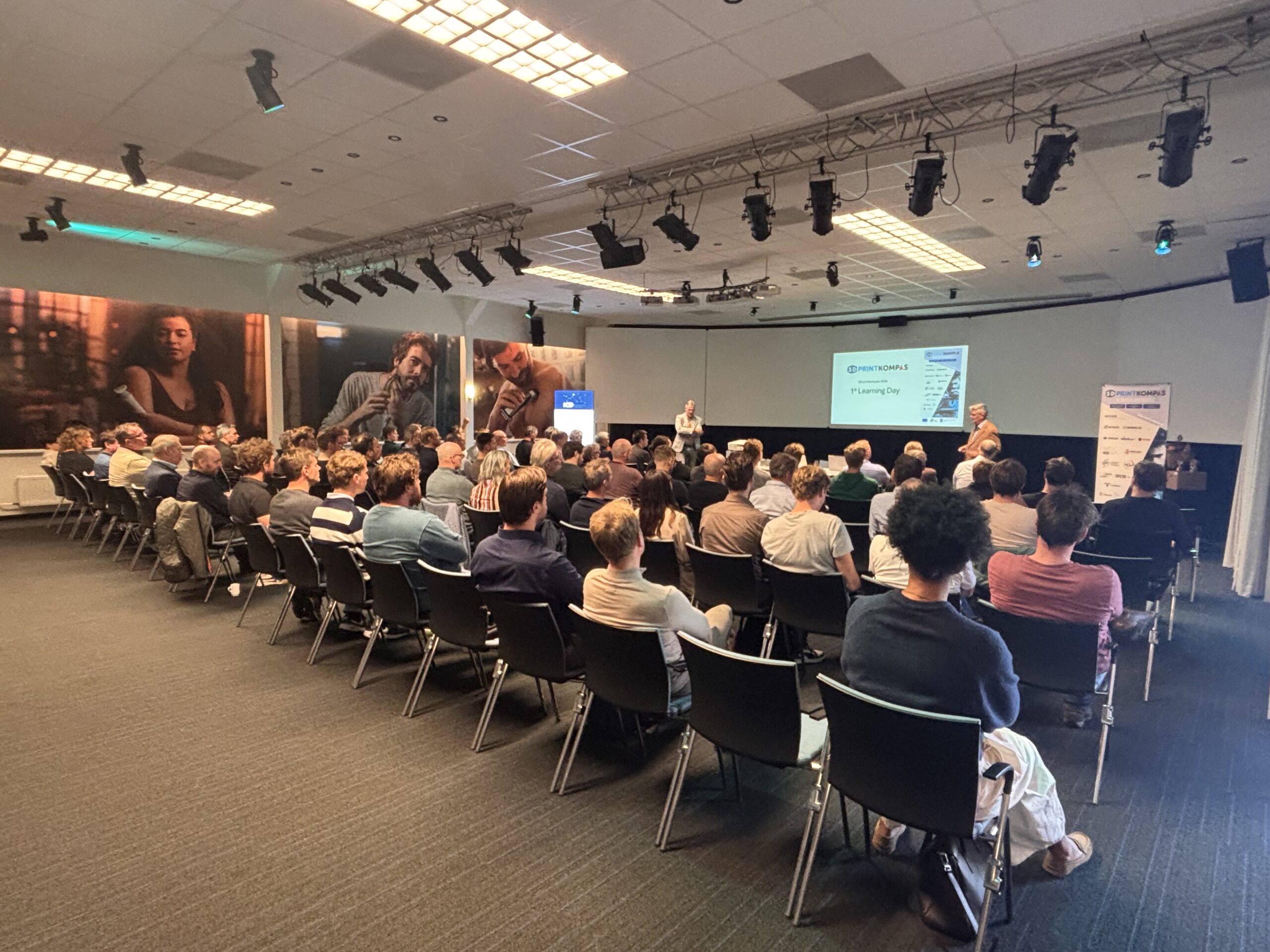
From 3D-printed boats and medical footwear to applications in aerospace, electronics and the high-tech industry. During the first Learning Day of 3D Printkompas 2030 on Thursday 24 September, companies and knowledge institutions came together at the Philips site in Drachten. The focus was on sharing knowledge about the latest developments in 3D printing and additive manufacturing.
The meeting took place at the Philips site in Drachten and partly in the SKILL building. After a joint plenary program, participants could choose from various parallel sessions. This resulted in an afternoon full of practical examples, technological insights, and knowledge exchange.
3D Print Compass: from research to business
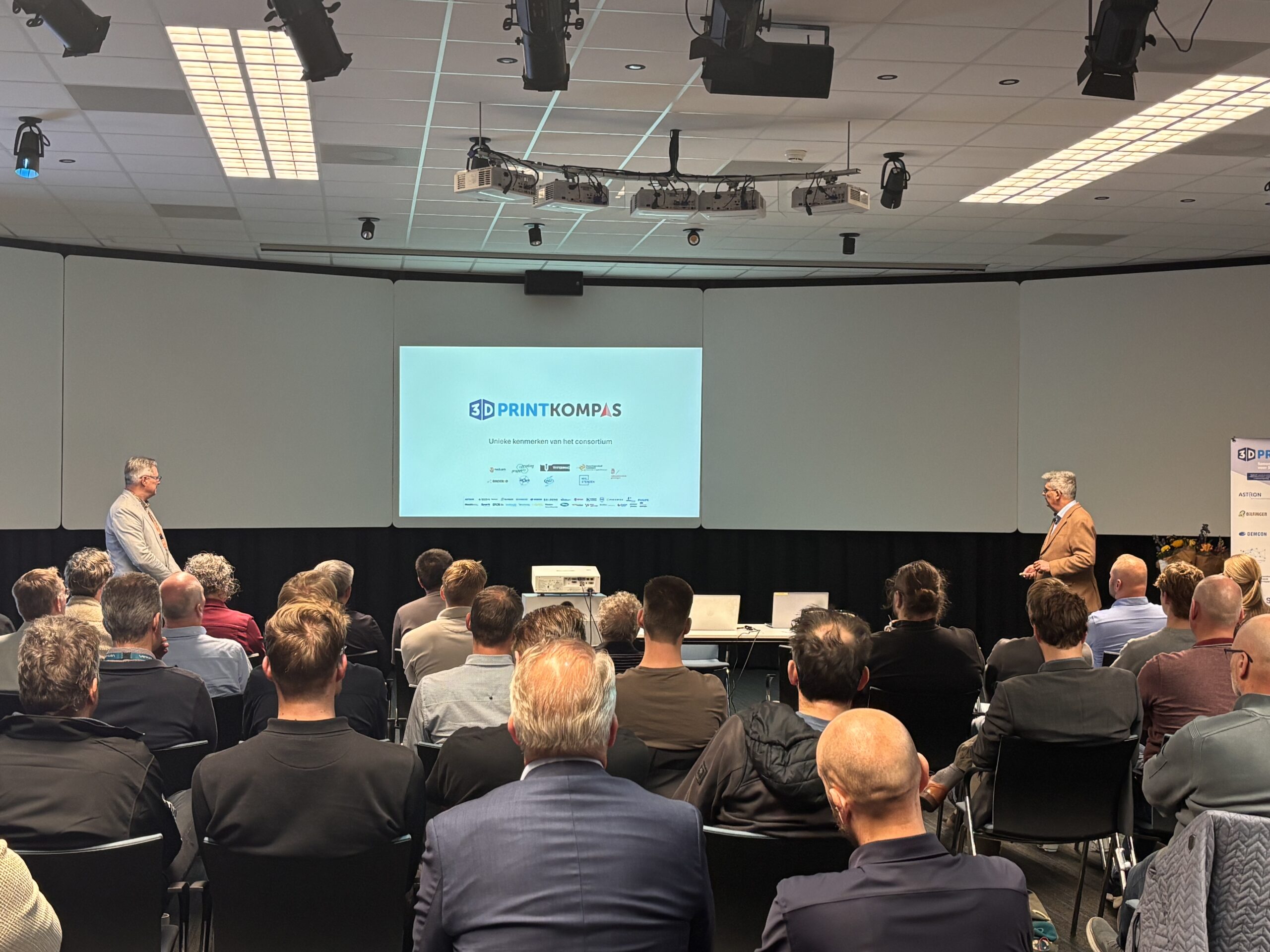
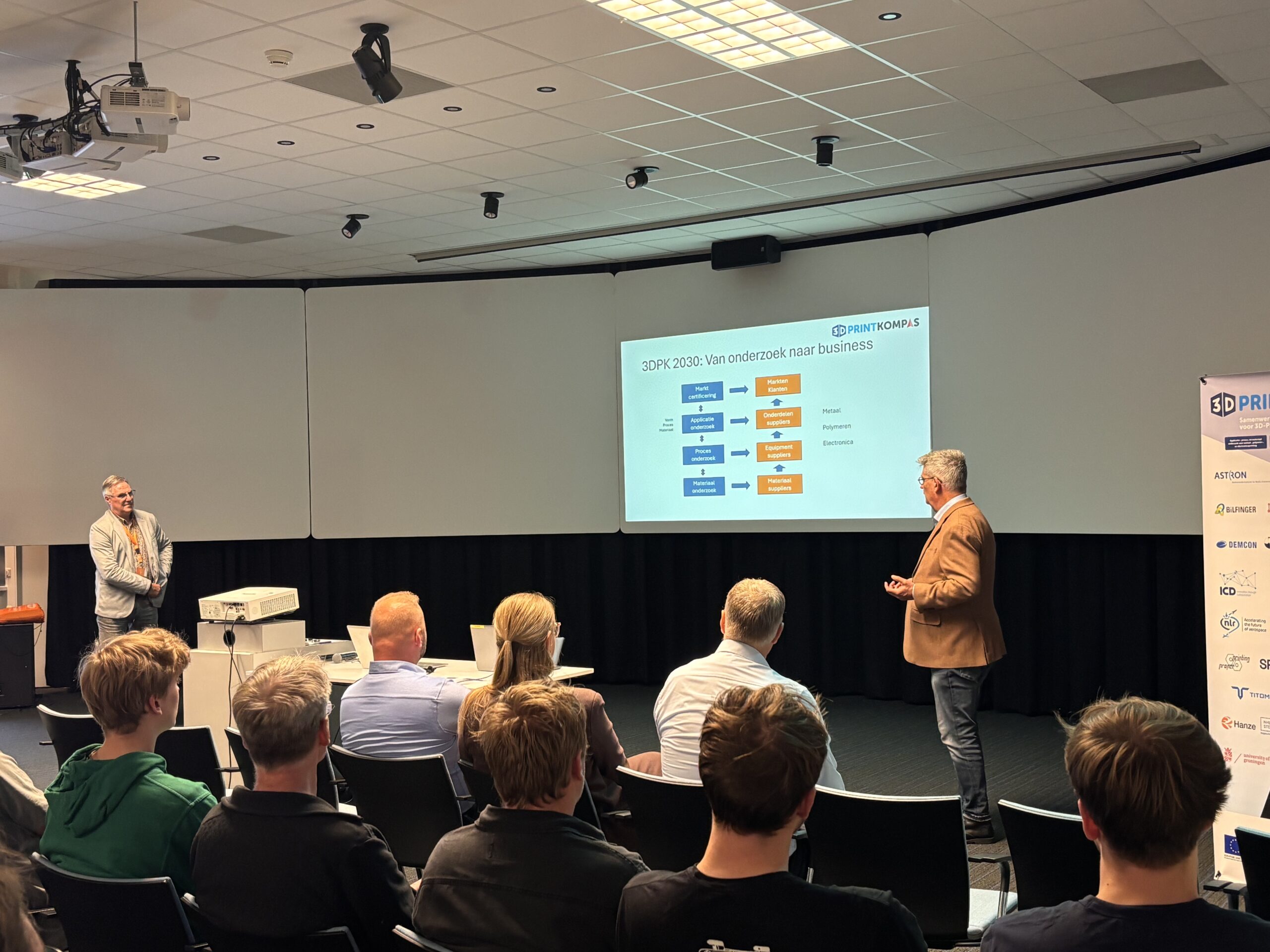
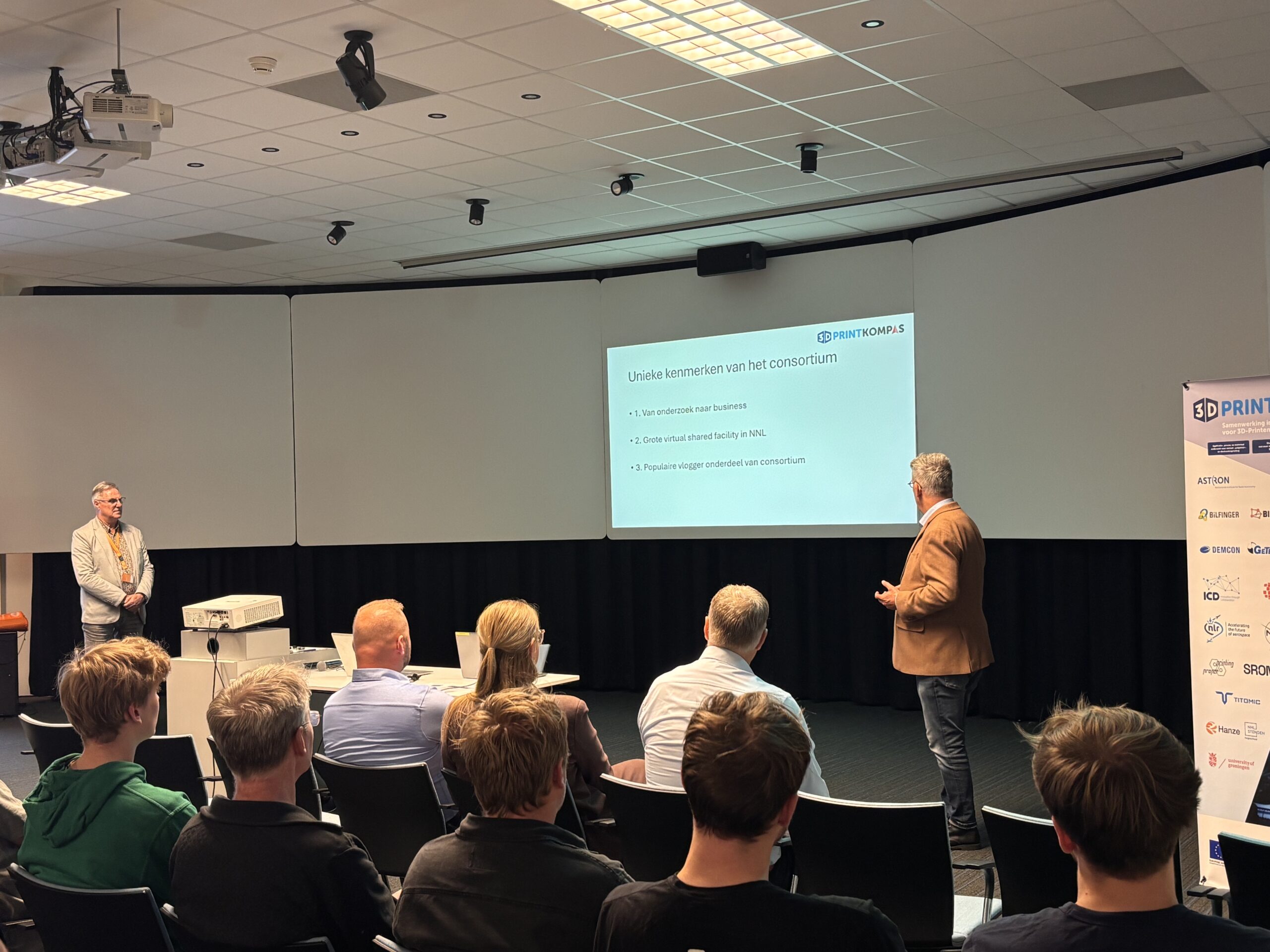
The afternoon began with an opening and introduction by 3D Print Compass 2030, by Joost Krebbekx (ICD) and Chris van Malkenhorst (Binder3D). The consortium focuses on the entire chain of additive manufacturing. This includes material, process and application research, as well as suppliers, markets, customers and certification. Furthermore, three important technology areas come together: metal, polymers and electronics.
An important component is the large virtual shared facility in the Northern Netherlands. Within the network, a wide range of 3D printing equipment and supporting technology is available. This ranges from smaller printers to large-format systems and equipment for 3D scanning, material analysis, testing, debinding, and sintering, among other things.
With this, 3D Printkompas aims to connect knowledge and facilities and bring new applications from research to practice faster.
From a family boat to 12-meter 3D printing
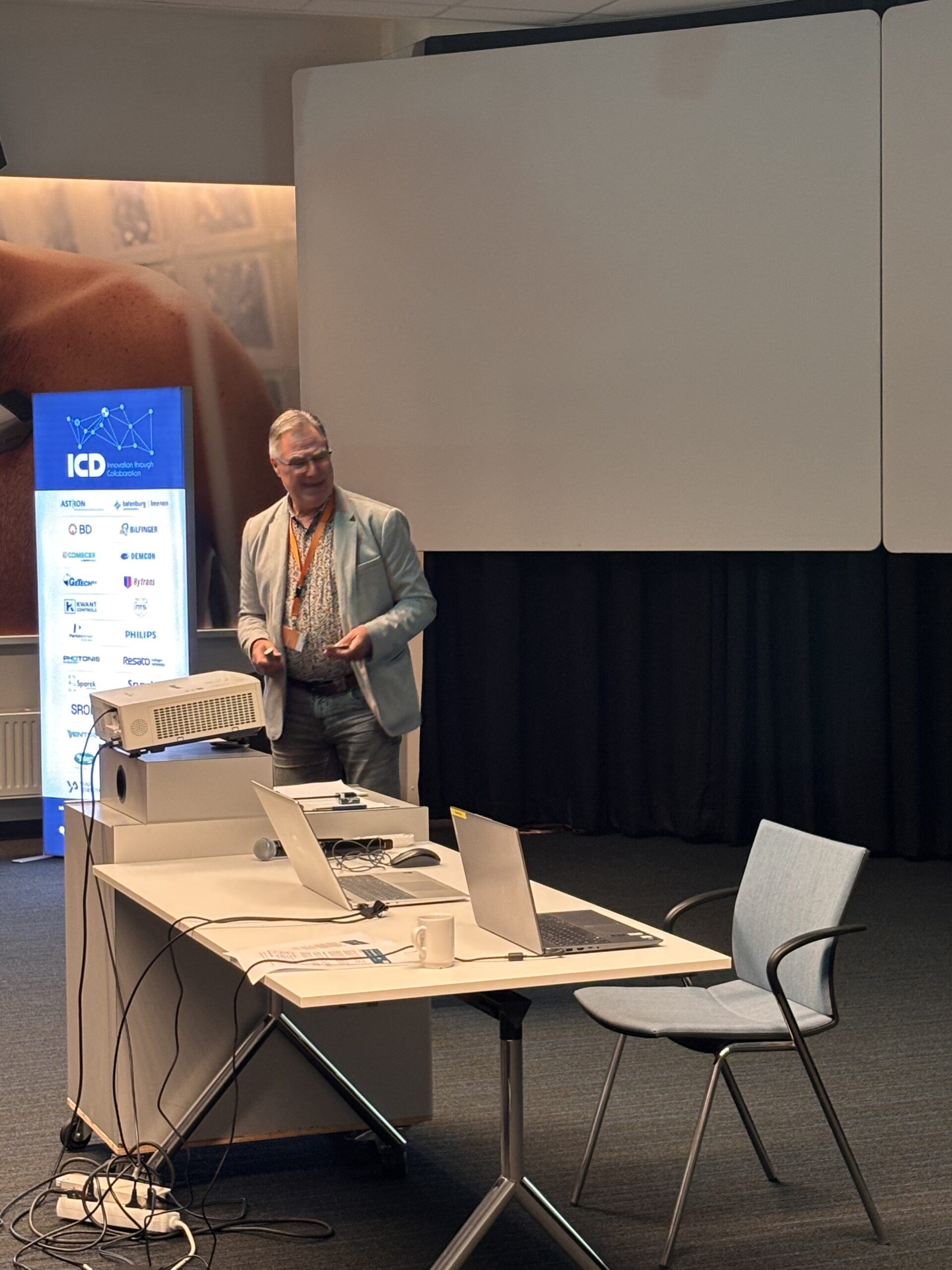
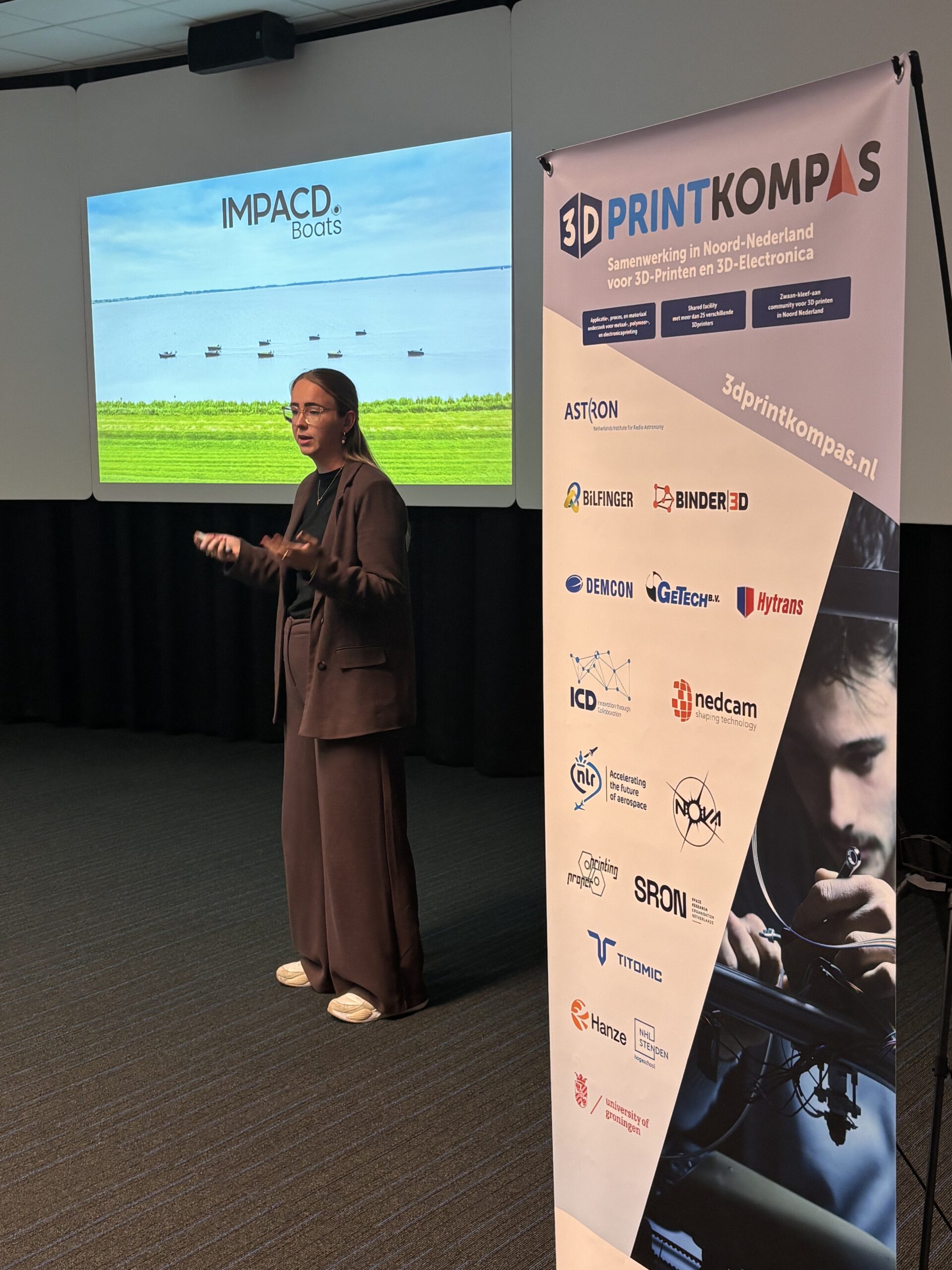
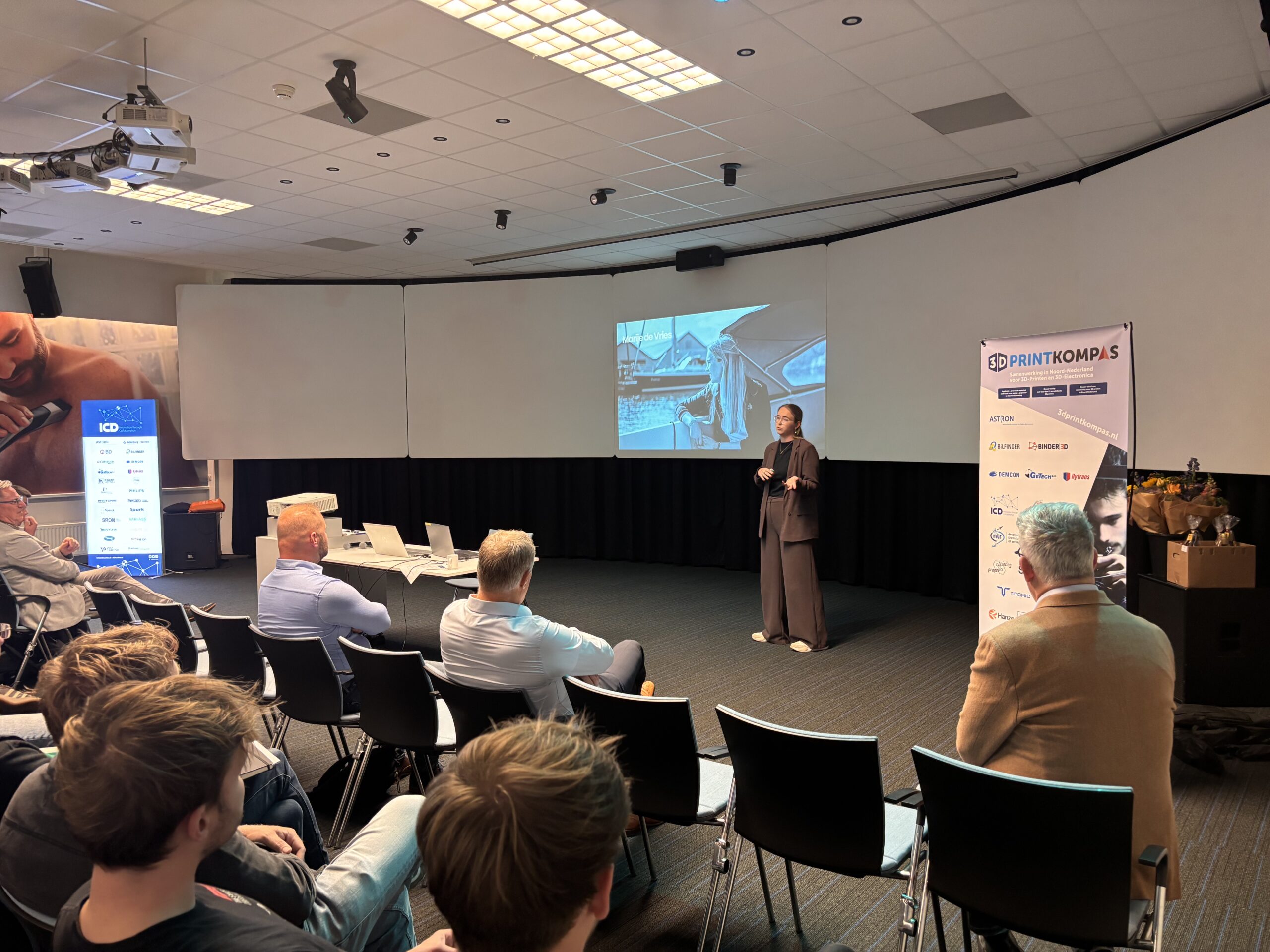
Thereafter, Marije de Vries by IMPACD Boats From Woudsend, the participants join in the company’s extraordinary growth story.
What started as a desire to build a sustainable boat for the family grew into a company that is using large-scale 3D printing for maritime applications. IMPACD was founded in 2020 by Marieke de Boer And Jörgen de Jong. The company in Woudsend now has the 8,000 m² IMPACD Centre, with its own harbor, assembly hall and a 12-meter-long 3D printing line.
IMPACD is now also working on larger and experimental maritime applications, such as the 12-meter-long Fenders for the SeaRush project, in which unmanned vessels are being experimented with for the Ministry of Defense.
The story thus aptly showed how additive manufacturing can evolve from an initial idea to a mature production technology and new business.
Bedrock3D: the material determines the application
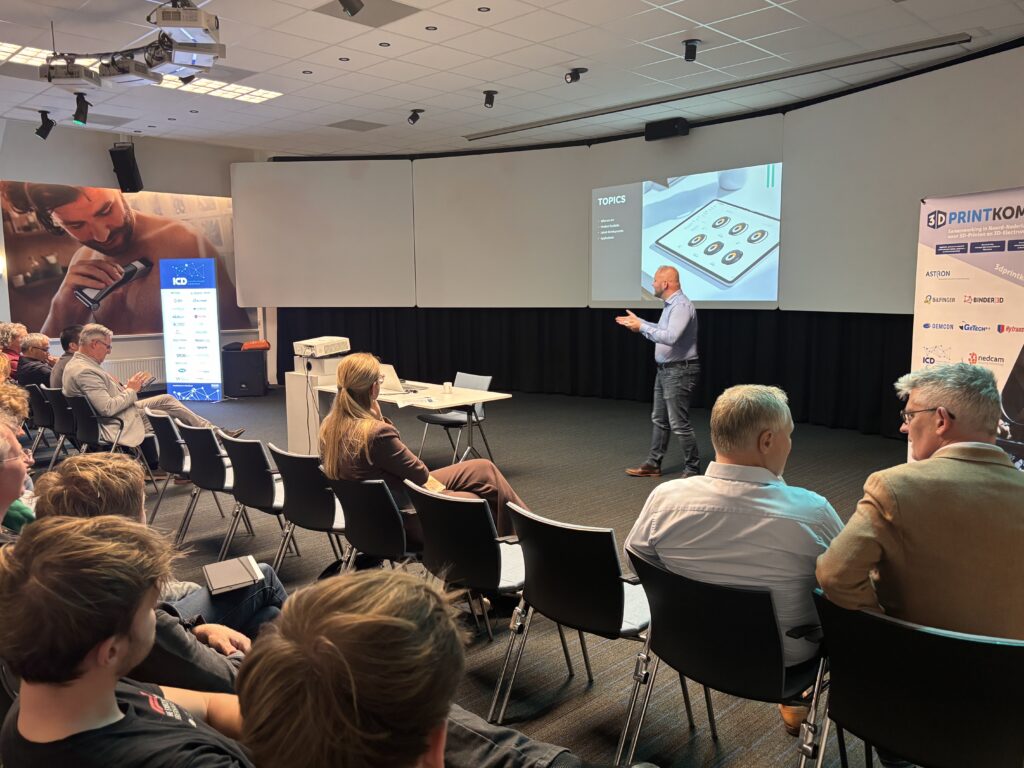
Then he let Rien Geerts by Bedrock3D From Emmen, we see how important material development is for successful 3D printing applications.
Based on a practical case study medical shoe insoles He spoke about the development of Foaming TPU filament. Before such a material can actually be used by podiatrists in practice, it must meet a variety of requirements.
Not only the printability is important in this context. The properties of the final product must also match the application. The case made clear how much material and process knowledge is required before a 3D printed product can be reliably used in practice.
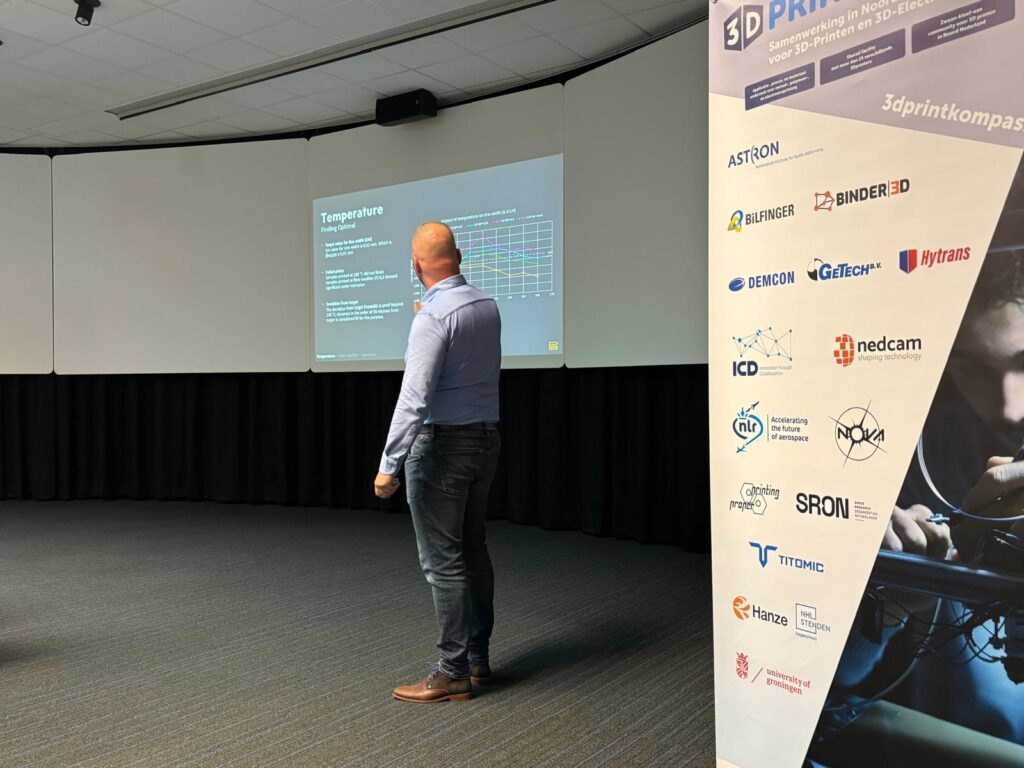
Three rounds full of applications of additive manufacturing
After the plenary program, the participants spread out across the AH Hall and various spaces in the SKILL building. Between 15:30 and 17:00, three rounds of half-hour duration took place. In each round, participants could choose themselves which technical level they wanted to follow.
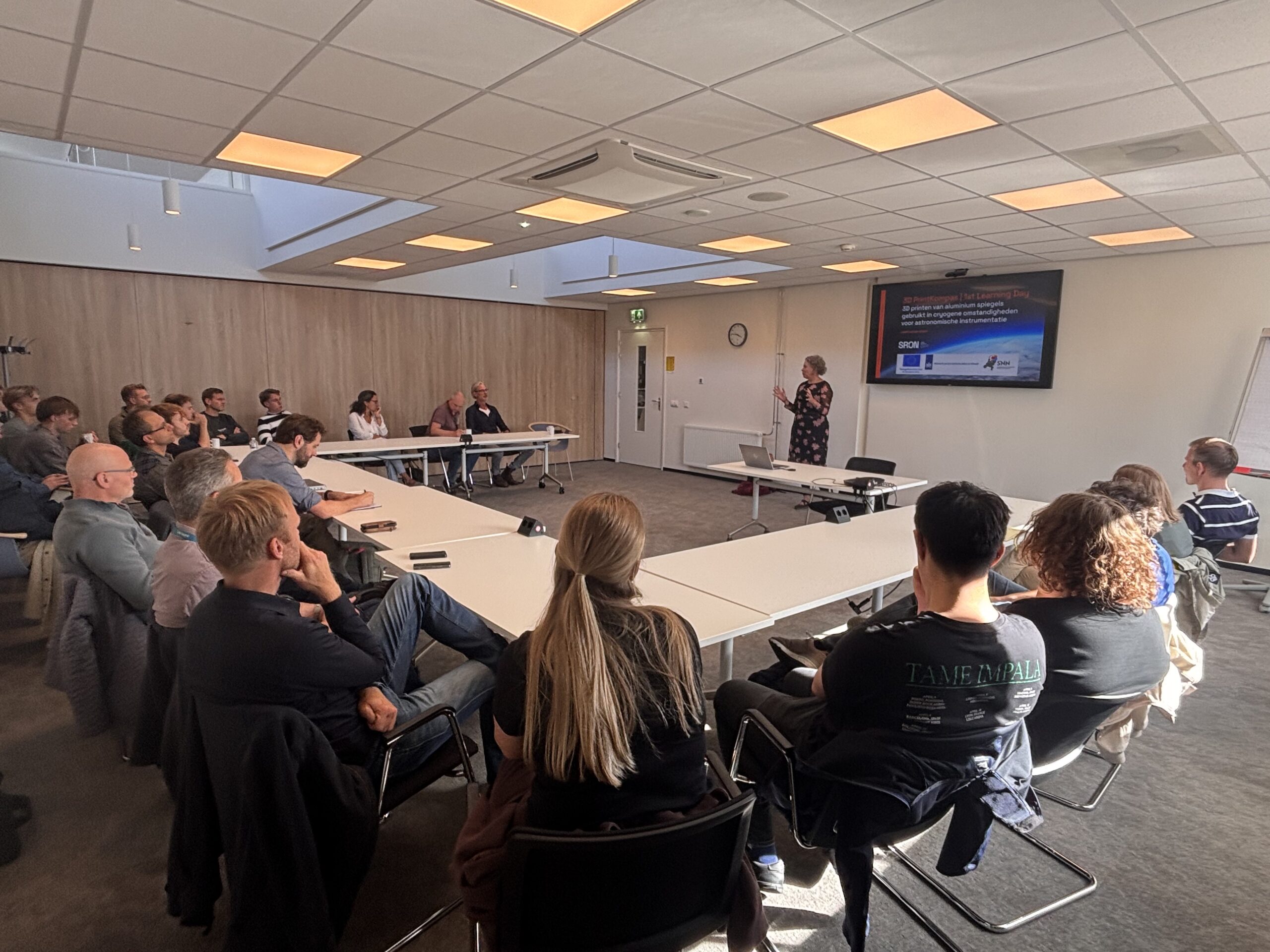
During the first round, they stood Titomic, Binder3D and SRON On the program. Titomic discussed the latest developments in mobile cold spray for service and maintenance. Chris van Malkenhorst from Binder3D presented a 3D production path for parts that come into contact with the mouth and skin. Gaby Aitink-Kroes From ICD company SRON, they showed how 3D-printed aluminum mirrors can be used under cryogenic conditions in astronomical instrumentation.
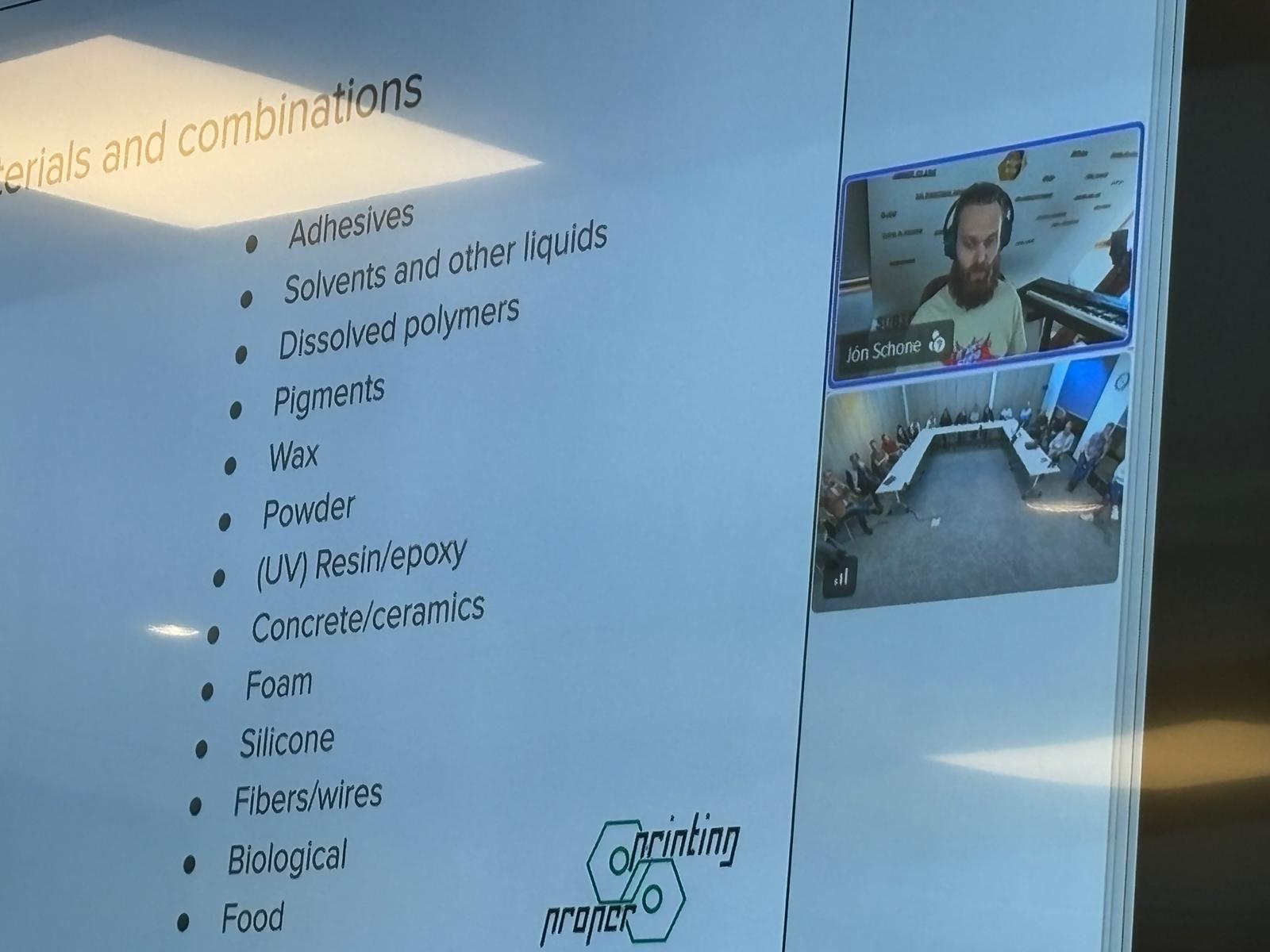
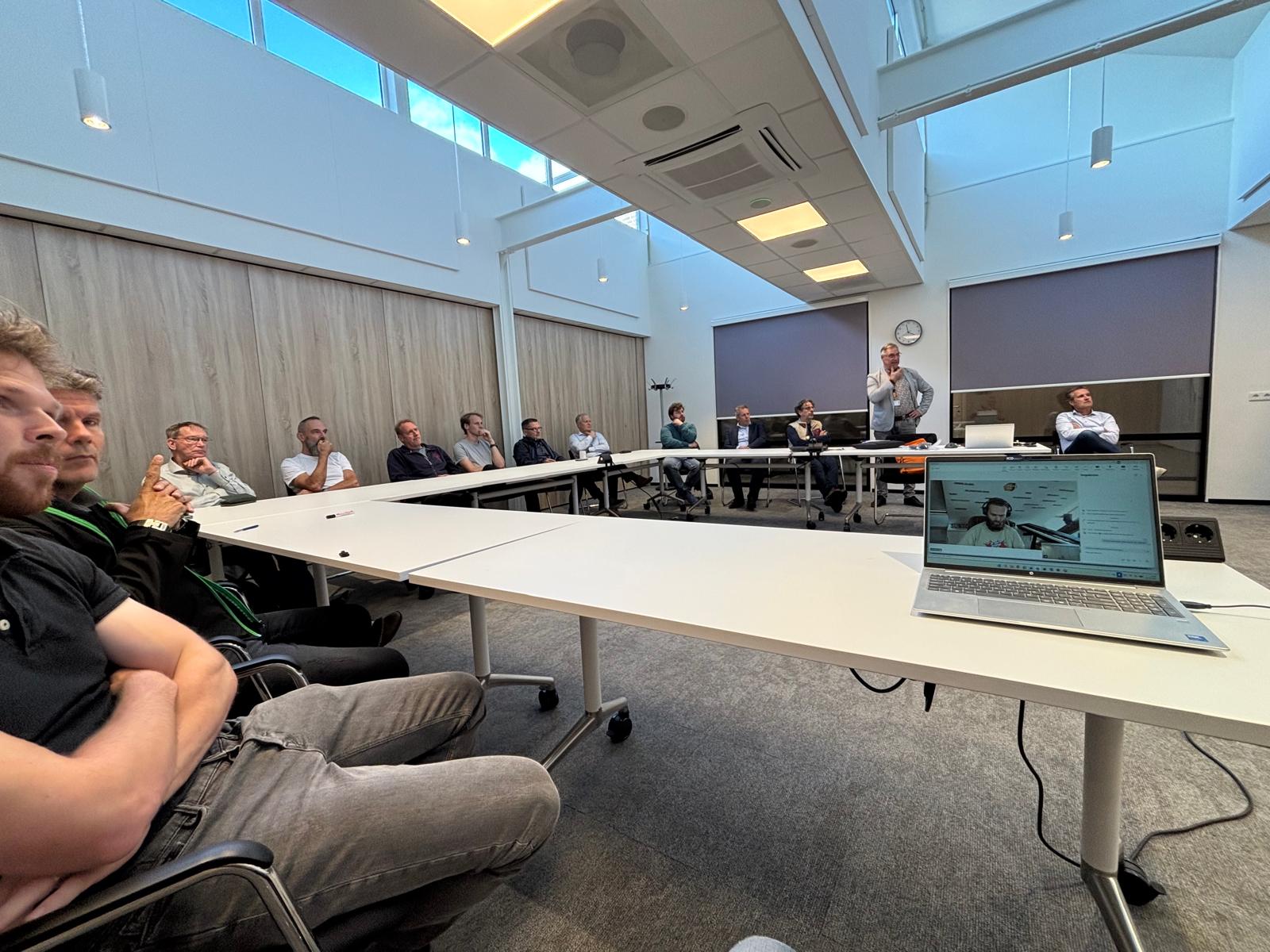
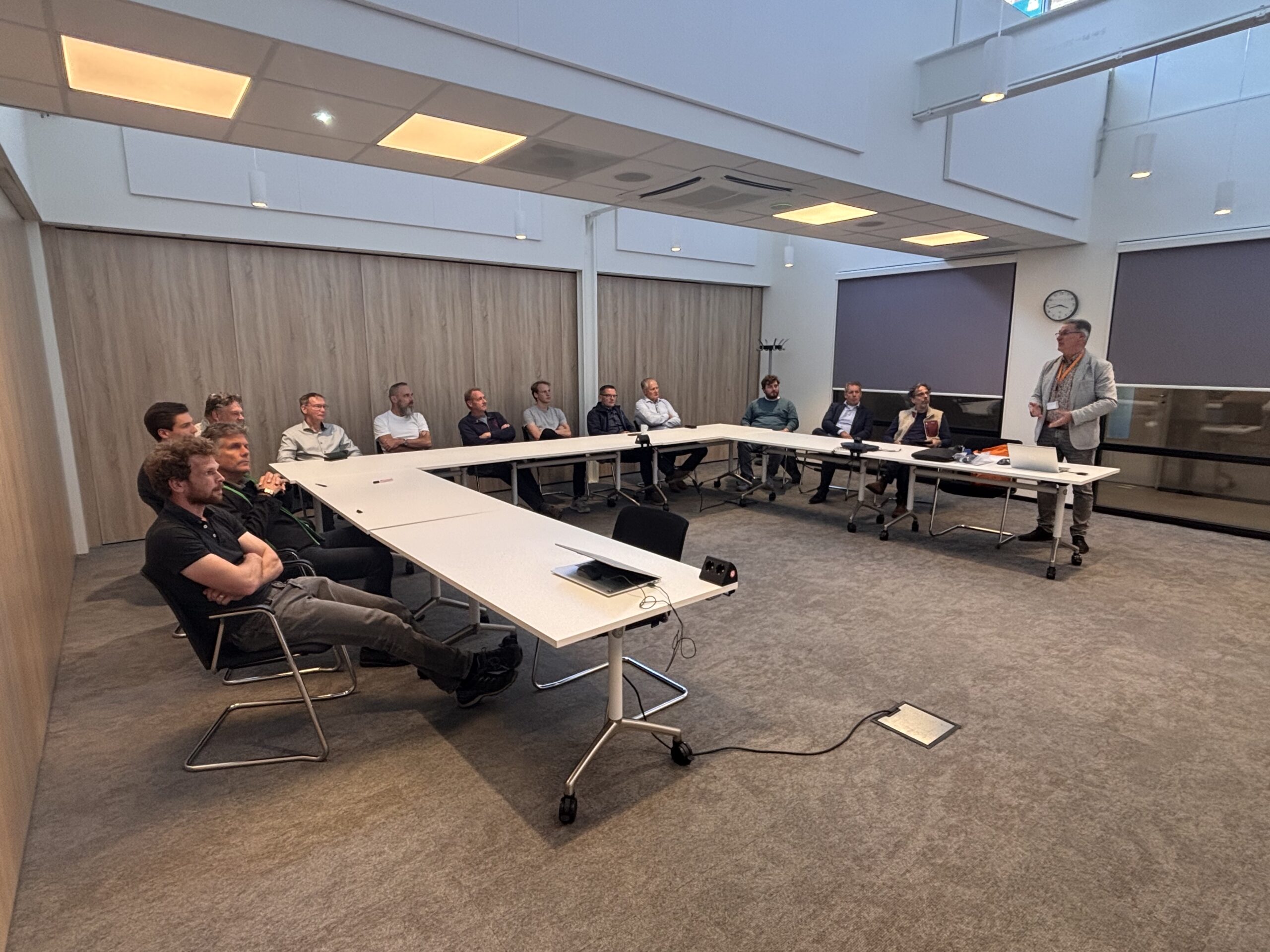
In the second round, visitors could choose from NLR, Proper Printing and NHL Stenden. NLR shared developments and ambitions regarding DED and cold spray. Jón Schone From Proper Printing, (via Teams from Prague) they discussed the construction of PEEK and TPU printers and the use of AI in 3D printing. NHL Stenden focused on the mechanical and viscoelastic behavior of large-format 3D printed products.
During the third and final round, they stood ASTRON and the University of Groningen (RUG) Central. ICD member ASTRON presented applications involving printed electronics, including for LOFAR antennas, and cold spray on polymers. The RUG discussed, among other things, optomechanic components and thermally stable aluminum alloys for satellite mirrors using 3D metal printing technology.
Sharing knowledge and building new connections in the North Netherlands
It was precisely the breadth of the program that made the first Learning Day interesting. Polymers, metals and electronics were all covered. At the same time, the applications ranged from medical products and boats to aviation, astronomy and satellite technology.
With this, the meeting in Drachten showed how much knowledge about 3D printing and additive manufacturing exists in the Northern Netherlands. By bringing companies and knowledge institutions together, experiences can be shared and new connections between research, technology, and business can be created.
At 17:00 the substantive program was concluded. After that, during the drinks reception there was plenty of opportunity to continue discussing the presentations, applications, and possible collaborations.
The first Learning Day therefore precisely fulfilled the ambition of 3D Printkompas 2030: connecting knowledge and facilities and working together to bring new 3D printing applications to the practical world.
