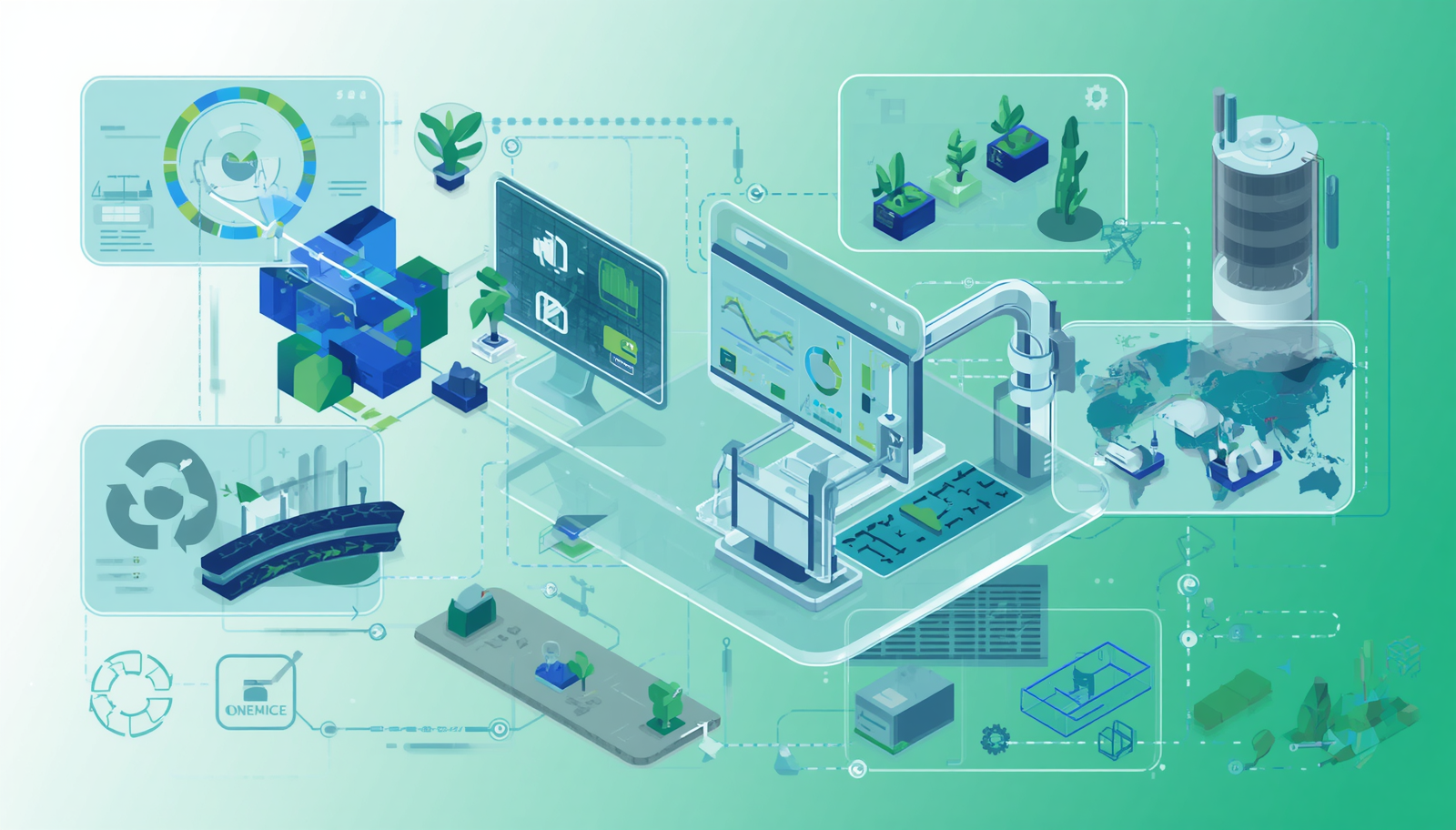
As a high-tech company, how do you make sustainable choices that really make a difference? That question was the focus of a recent workshop organized by Innovatiecluster Drachten (ICD). As part of the joint project Green Mechatronics seven ICD companies started working with the Environmental Impact Tool (MIT) from Circonnect. The goal: to gain faster insight into the environmental impact of products and make informed choices for sustainable innovation.
Sustainability increasingly important for the high-tech industry
Customers, supply chain partners, and legislation are increasingly asking questions about the origin of materials, CO₂ emissions, and the total environmental impact of products. Developments such as the Corporate Sustainability Reporting Directive (CSRD) and the future digital product passport also increase the need for reliable sustainability data.
This is an important issue for the companies within the Innovatiecluster Drachten initiative. That is why seven ICD companies are participating in the project Green Mechatronics collaboration on knowledge development regarding sustainability, circularity, and life cycle analysis.
The participating companies are:
Together, they are investigating how sustainability can be incorporated into the product design phase.
Quick insights with the Environmental Impact Tool
A comprehensive Life Cycle Analysis (LCA) provides valuable insights, but often requires a significant amount of time, expertise,.
This tool allows companies to perform an initial analysis of a product's environmental impact within hours. This quickly reveals where the greatest opportunities for improvement lie, for example in terms of material usage, production processes, energy consumption, or end-of-life strategies.
During the workshop, participants were given an explanation of how the tool works and immediately got to work with their own products. The focus was not only on the calculation itself, but also on the interpretation of the results and the next steps towards sustainability.
From insight to action
An important outcome of the workshop is that companies can better determine which measures actually have an impact. Small adjustments can sometimes yield significant sustainability gains, while other changes have hardly any effect.
It also became clear how important collaboration in the supply chain is. To gain a more accurate understanding of environmental impact, data from suppliers, customers, and other partners is often indispensable. That is precisely why the workshop offers tools to conduct these conversations more effectively.
Within various ICD companies, the acquired insights are now being used to further optimize product designs, material choices, and production processes.
Green Mechatronics: working together for sustainable innovation
The project Green Mechatronics See how collaboration within the ICD network leads to accelerated innovation. By sharing knowledge and experiences, companies can take faster steps towards circular design, more sustainable production, and future-proof technology.
The workshop on the Environmental Impact Tool is an important example of this. Not only because companies gain insight into their current impact, but especially because they learn where the greatest opportunities for improvement lie.
Knowing more?
The original article from Circonnect, on which this message is based, can be read here:
Innovatiecluster Drachten: Getting Started with the Environmental Impact Tool