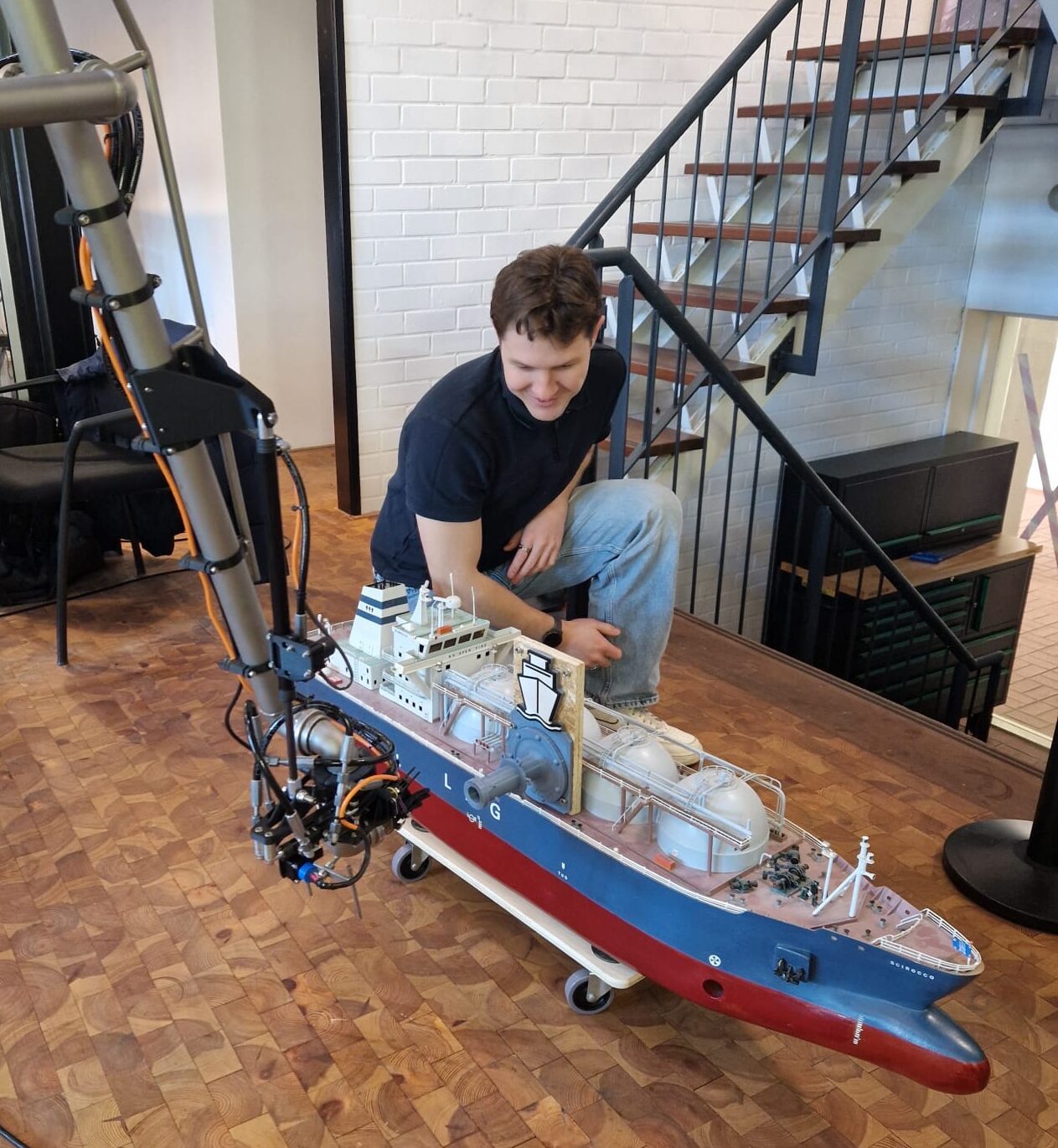
This is part 2 of a trilogy about Engineering Doctorate (EngD) in Autonomous Systems. In this article from last month told Rinnert Jan Politiek about his experiences at Omnidots. In this episode we talk about Damien Dufour. He works at AutoMooring Solutions (Groningen) on the development of autonomous maritime systems. His EngD shows how academic research and practice-oriented innovation can strengthen each other.
What happens when you combine artificial intelligence, robotics, and marine technology? According to Damien Dufour, this creates an especially interesting challenge: designing a system is one thing, but ensuring that it works reliably in the real world is something entirely different.
Damien is the Lead Engineer for Maritime Robotics & AI Development at AutoMooring Solutions. At the same time, he is doing his Engineering Doctorate (EngD) in Autonomous Systems at the University of Groningen (RUG).
His research focuses on computer vision and neural networks for object detection and localization in a maritime environment. Through this, he is working on technology that can contribute to further automating tasks related to ships.
From engineering to AI and autonomous systems
Damien originally comes from South Africa and has now lived in the Netherlands for seven years. His background is in industrial engineering, with a strong focus on robotics and automation.
At AutoMooring Solutions, he focuses on maritime robotics and AI. His work lies at the intersection of artificial intelligence, computer vision, robotics, control engineering, and mechanical systems. It is precisely that combination that appeals to him.
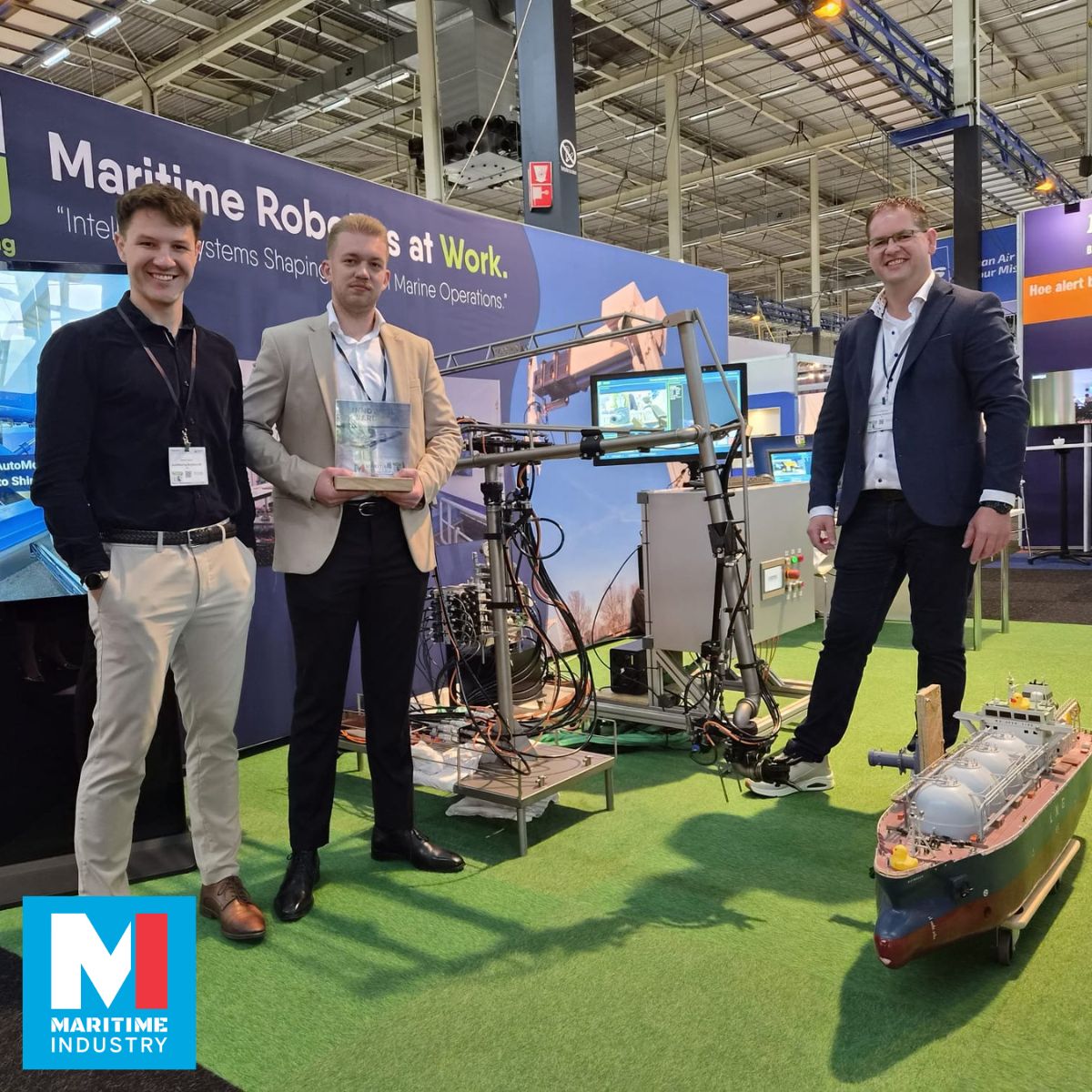
AutoMooring Solutions develops solutions to further automate operations in the maritime sector. Damien is working, among other things, on automating a mooring system and on autonomous bunkering, where AI vision and AI targeting play an important role.
The reason is clear. The maritime sector is relatively traditional and new technology is not readily adopted everywhere. At the same time, the shortage of qualified personnel is increasing. Safety also plays a major role. Working with fuels, for example, carries risks. Automation can therefore not only deliver efficiency but also contribute to safer working practices.
Why an EngD and not a PhD?
After his previous degree, Damien wanted to develop further. However, he found a PhD to be too academic. He was looking for a program where he could conduct research and actually apply the results in practice.
That is why an EngD approached him.“I wanted to do high-level research, but at the same time develop something that actually makes a difference in practice.”
The combination of different fields of study was also an important reason for him to choose Autonomous Systems. AI, software, robotics, and engineering come together. What appeals to him most is the step from observing to acting.
An own innovation issue
Damien is now in the most important research and development phase of his EngD. The problem definition and the technical direction have largely been determined. Now the focus is on developing, testing and validating the computer vision technology.
His EngD is particularly noteworthy because he worked at AutoMooring Solutions before starting the project. The project thus emerged from the practical world. Damien himself came up with the first prototype of the system. Now he is working on further development and scaling it up.
The ultimate goal is ambitious: a system that not only works technically, but is also reliable and accurate enough to be put into practice.
Computer vision at sea is a big challenge
On paper, object recognition with AI might sound simple. In a maritime environment, that is certainly not the case. Water reflects light. The weather changes constantly. There can be rain, runoff water, and difficult lighting conditions. Objects can also be partially obscured by other ships.
There is also another problem: there is relatively little suitable data available to train the AI. The maritime sector is still lagging behind some other sectors in this area.
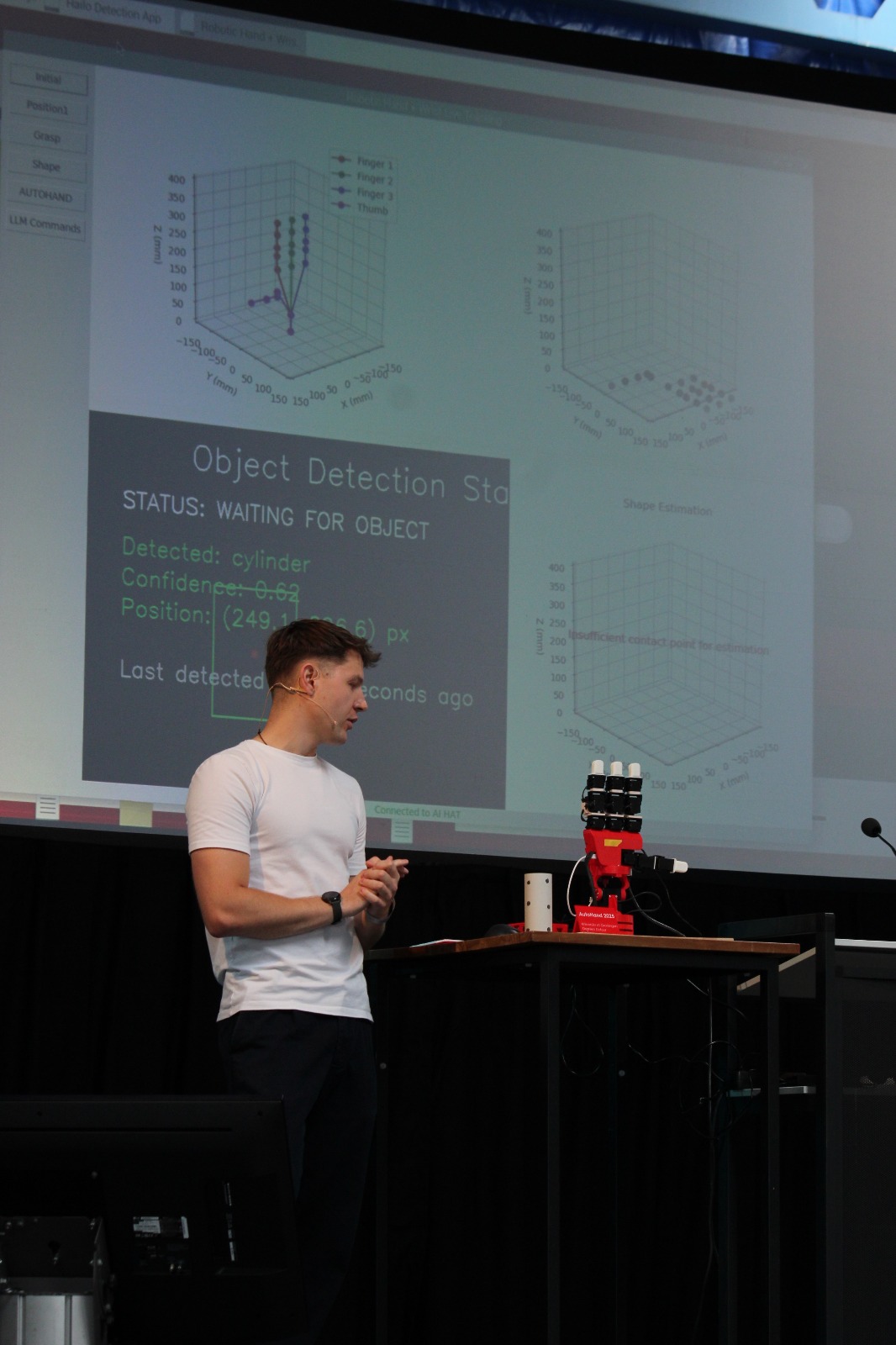
Damien therefore develops new neural networks for detecting and locating objects. An example is the recognition of different types of installation and removal points. To make a system function reliably, it must learn to handle many different situations.
A prototype that performed better than expected
One of the moments Damien is most proud of is the first proof of concept. The prototype showed better results than expected beforehand. That is an important moment in an innovation process. At the same time, it is only a first step.
Because demonstrating that a system works in a laboratory is different from putting it to use reliably in a dynamic maritime environment. Damien has increasingly come to appreciate that difference during his EngD studies.
Technology is only one part of the problem
An important lesson from his EngD is that technical performance is only one of the requirements.
Within a university, you can focus relatively strongly on the technical solution. Within a company, however, other factors come into play. These include costs, available resources, time, safety, customers, competitors, and the ability to integrate a solution into existing systems.
Damien therefore describes the university as a kind of protected environment. In business, a technology must prove itself within a much larger context.
That requires a different way of thinking. Not only that: Does it work? But also: Is it safe? Is it practical? Can it be integrated? Is it economically feasible? And does it actually provide added value?
From specialist to systems thinker
It was precisely there that the EngD program taught him a lot. During his previous education, the emphasis was mainly on industrial engineering and robotics. Within his EngD program, he has further deepened his knowledge in AI, machine learning, computer vision, and software development.
But perhaps even more importantly, he has learned to look beyond his own technical discipline. A solution must fit within the entire system. And to do that, you need to be able to communicate with different people and disciplines. A conversation with the marketing team, for example, requires a different explanation than a conversation with the technical team or the management team.
AI must also prove itself outside the testing environment
The EngD track has also changed its perspective on AI. Damien has become more critical of systems that perform well on a benchmark but perform less well once they are deployed in the real world.
An AI model can achieve excellent results with static test data. In a dynamic environment, performance can then drop significantly. He considers that difference important. “A good result on a benchmark does not mean that an AI system will also perform well in the real world.” Therefore, for autonomous systems, reliability is at least as important as the technical innovation itself.
What does an EngD bring to a company?
According to Damien, one important advantage of an EngD is the additional research capacity. A regular product team often does not have enough time to thoroughly investigate a complex technical issue. An EngD trainee can, on the contrary, devote longer time to that.
In addition, a trainee brings a network from the university. Through the RUG, Damien can, for example, relatively easily leverage knowledge and expertise from different research groups. For AutoMooring Solutions, this, according to him, opens up a new opportunity to connect advanced knowledge with concrete technical challenges.
And what does the EngD candidate learn from a company?
This interaction works in two directions. At the university, the focus is on research questions, new methods, and ambitious technical solutions. In the business world, there is an additional important question: Can we actually use this?
A solution must be able to be integrated into existing systems. It must be safe. It must be practically applicable. And ultimately it must offer added value compared to what already exists. According to Damien, this perspective is much more strongly conveyed to students in business life.
No additional capacity, but a new capability
Damien is clearly positive about the potential of an EngD for companies. His main advice: choose a problem that is truly difficult. According to him, an EngD is not intended to further develop an existing problem for which a solution already exists. Complex problems, in fact, offer space for research, experimentation, and new approaches.
Freedom is also important. Give an EngD trainee the space to look at the problem from different perspectives. “It’s not just extra engineering capacity. It’s a new capability that you develop as a team.” According to Damien, that is exactly where the strength of an EngD lies.
An EngD for students and companies
Damien now clearly sees himself continuing to advance in the world of robotics and AI. He is particularly drawn to designing new AI solutions for traditional problems. In five years’ time, he may see himself as a strategic thinker or leader of an R&D team, helping to develop new technology and bringing it to practical use.
His advice to students is clear. An EngD is suitable for people who find research interesting, but also like to build and develop. You need to be comfortable with uncertainty, be able to work independently, and be able to combine different disciplines and opinions.
His own description of an EngD sums it up nicely: “Advanced research combined with real-world engineering. You develop new technology for autonomous systems and then ensure that that technology actually works.”
For ICD, it is precisely this connection that is interesting. The North Netherlands has innovative companies that work on complex technological issues. At the same time, there are talented graduates who want to further develop their knowledge and apply it immediately. An EngD brings these two worlds together.
In the third and final part of this series we speak with Jesse Roorda, who is his EngD at Philips We are doing this to show another side of the collaboration between universities and industry.
Here is the link to the article from last month