
This is part 1 of a triptych in which ICD follows three Engineering Doctorate (EngD*) trainees working on technological innovations in the Northern Netherlands. In this series, they share what it is like to combine science and business. After this first story with Rinnert Jan Politiek coming soon Jesse Roorda (Philips) and Damien Dufour (Automooring Solutions).
After a university master's degree, many students choose a job or a PhD track. But there is also a third route: the Engineering Doctorate (EngD). In this two-year program, young researchers work on a concrete innovation challenge from a company, while simultaneously developing further at the university.
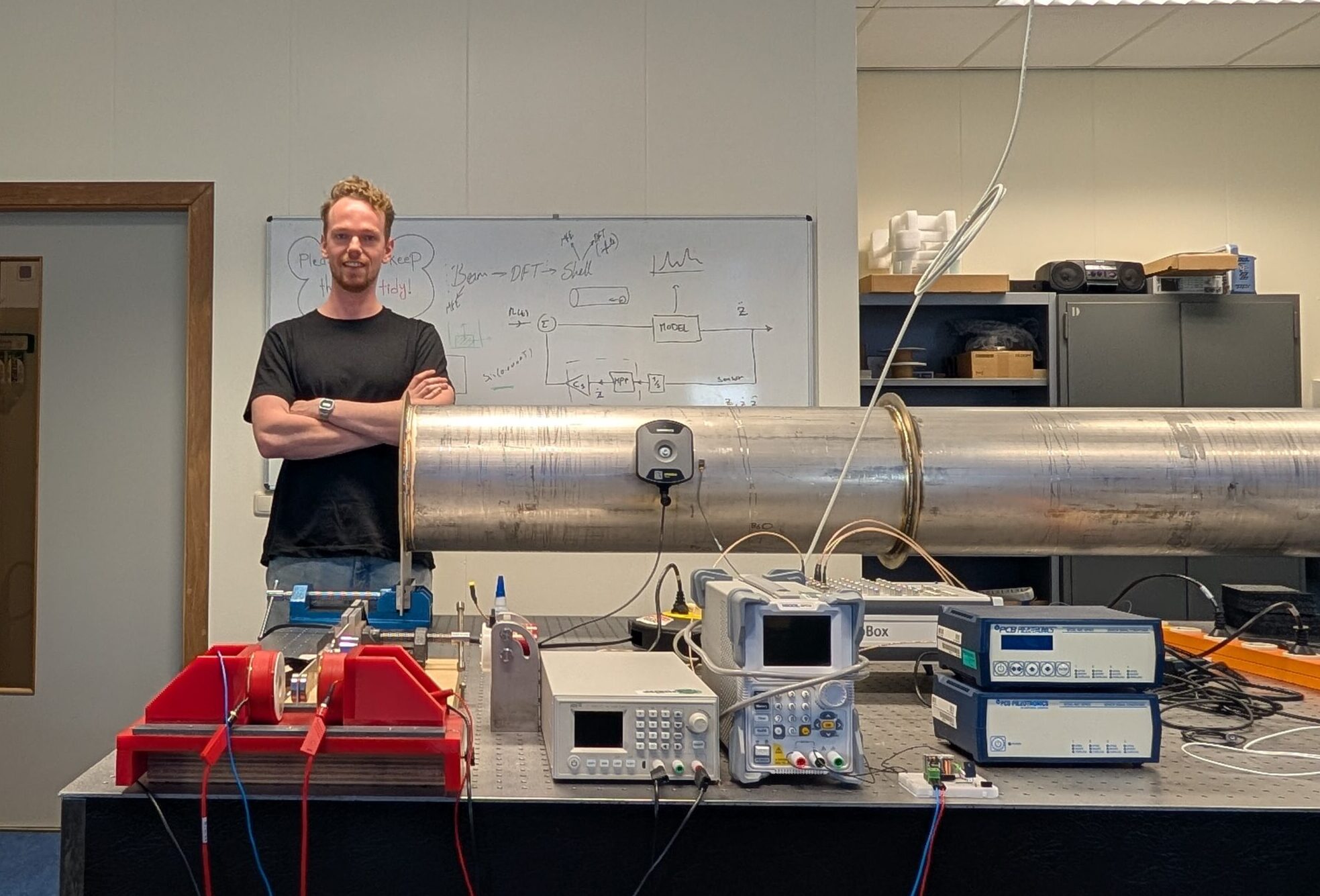
Rinnert Jan Politiek chose this combination. For a solid 4 months now, he has been working on his EngD Autonomous Systems at Omnidots in Leek, an innovative company that develops technology combining sensors, software, and data analysis to continuously monitor and provide insights into construction and infrastructure projects.
A bridge between university and business
Originally, Rinnert Jan is from Friesland. After his physics studies and a double bachelor's degree in Philosophy, he worked for the GGD for several years during the corona period. After that, he decided to further develop his technical ambitions with a master's degree in Mechanical Engineering at the University of Groningen.
An EngD was initially not at the top of his list. “This opportunity came up through my thesis supervisor. When I looked into it, I saw that it is actually a great bridge between the university and the corporate world.”
That combination still appeals to him. In the first year, the emphasis is on the university and the courses he is taking. At the same time, he works one to two days a week at Omnidots. In the second year, the focus shifts increasingly towards the company.
Working on the infrastructure of the future
At Omnidots, Rinnert Jan is working on a special project: Structural Health Monitoring for Hyperloop infrastructure.
The goal is to continuously measure and analyze vibrations using smart sensors. This allows the condition of the infrastructure to be monitored and potential problems to be detected early.
His role lies precisely at the intersection of hardware, software, and data analysis. “I deal with the part between the measured vibrations and their interpretation. At the moment, I am reprogramming vibration sensors so that they deliver exactly the right data.”
According to him, the biggest challenge is yet to come.“The ultimate goal is to develop a system that is reliable and robust enough to be used in practice.”
AI as a smart assistant
Although artificial intelligence is not the subject of his research, Rinnert Jan uses it every day.
For programming work, he uses Claude Code and Codex, among others. He also deploys AI to quickly create interactive visualizations that can easily explain complex technical topics.
At the same time, he remains critical.“AI offers enormous possibilities, but you always have to keep checking whether the outcomes are correct and whether the system is choosing the right direction.”
Learning in two worlds
Rinnert Jan sees precisely the combination of university and industry as the greatest added value of an EngD.
At the university, you learn the latest techniques and research methods. Within a company, you then immediately see how that knowledge can be applied to solve real problems.
He is also drawn to the work environment.“At Omnidots, the lines of communication are short. You know what everyone is working on and communication is fast. That makes for a pleasant working environment.” According to him, an EngD does require independence. You get a lot of freedom, but also a lot of responsibility.
Why an EngD is interesting for companies
Not only students benefit from an EngD program. According to Rinnert Jan, companies also get a lot of value out of this collaboration.
“You bring a fresh academic perspective. You look at existing issues differently and can apply new techniques immediately.” He therefore believes that more companies should make use of this type of program.
However, he does have an important tip:“Make sure there is a clear innovation question and provide good guidance to the trainee. That is how you get the most out of it as a company.”
A must-read for students looking to build innovation
Whether he would recommend an EngD? Rinnert Jan doesn't have to think twice about that: “If you find the academic world interesting, but also want to apply your knowledge directly, an EngD is a wonderful combination. You get a lot of freedom, but also a lot of responsibility.”
His own summary perhaps captures it most beautifully. “Actually, it's a bit like a work-study program for the university. You are right in between studying and working.”
What is an EngD?
An Engineering Doctorate (EngD) is a two-year post-master's program in which graduate engineers work on an innovation challenge from the business sector. They combine academic depth with practical experience within a company and develop solutions for current technological challenges.
*What is the Hyperloop?
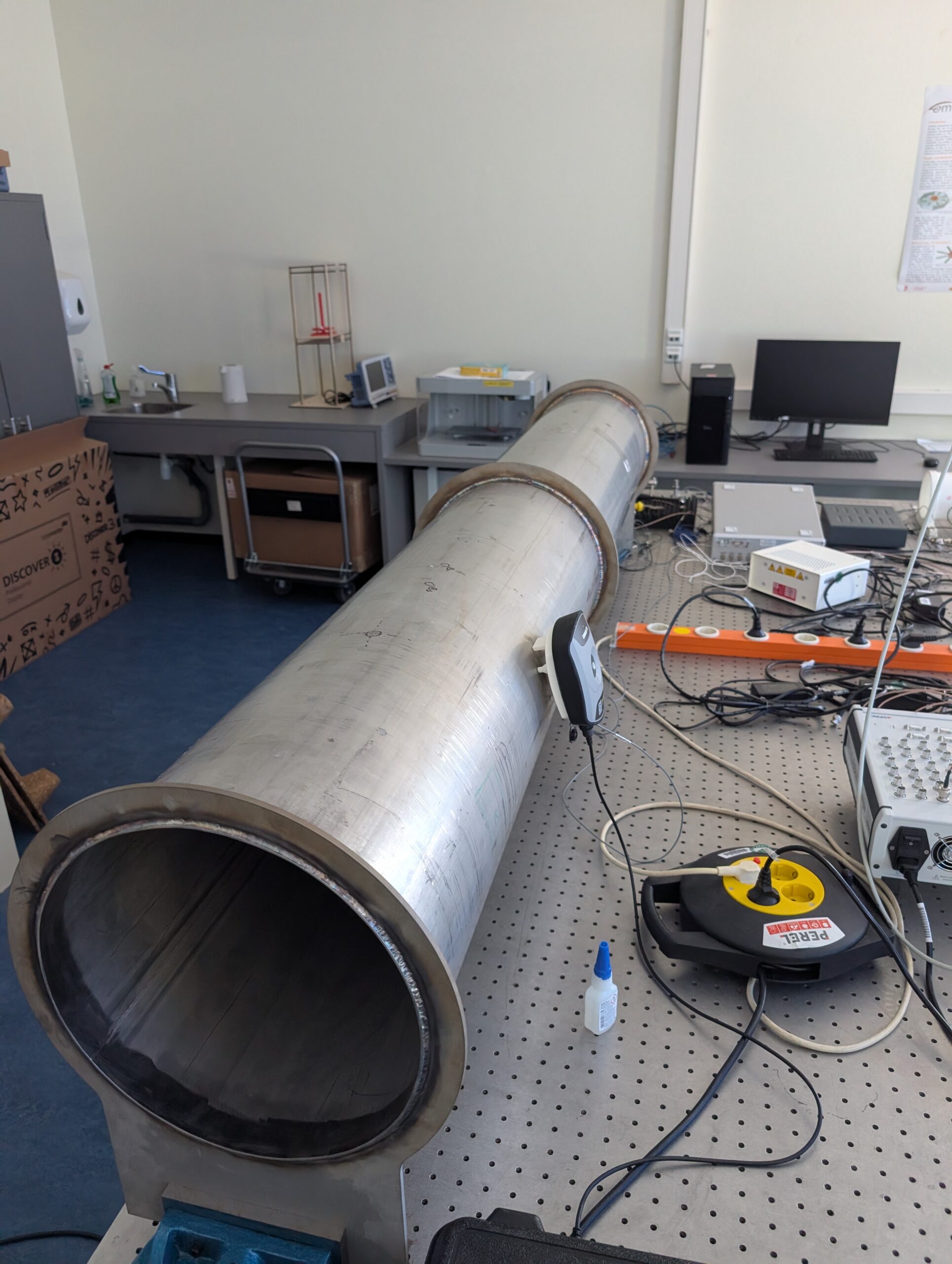
The Hyperloop is an innovative transportation concept in which vehicles travel at high speed through a nearly vacuum tube. Within the Omnidots project, on the test location in Veendam, in collaboration with the Hochschule Emden/Leer, investigated how sensors can continuously monitor the infrastructure to increase the safety and reliability of the system.
