ICD involved in the development of autonomous and remotely controlled vessels on the Wadden Sea
The ICD is a partner in the Interreg project Ferry Go!.Within this German-Dutch project, companies and knowledge institutions are collaborating on technological building blocks for the automatic, safer, and remote operation of maritime vessels on the Wadden Sea.
One of the prominent ICD members involved in the project is YP Your Partner. Within Ferry Go!, the company focuses on data acquisition, data processing, and Human Machine Interfacing (HMI).
German-Dutch cooperation
At Ferry Go!, Dutch and German partners are working together to develop new technology for the maritime sector. In addition to YP Your Partner, on the Dutch side FME, Kroes Marineprojects and Doeksen shipping company involved.
On the German side are Frisia shipping company and research institute DLR known project partners. Also Mariko and Marinom are active within the project.
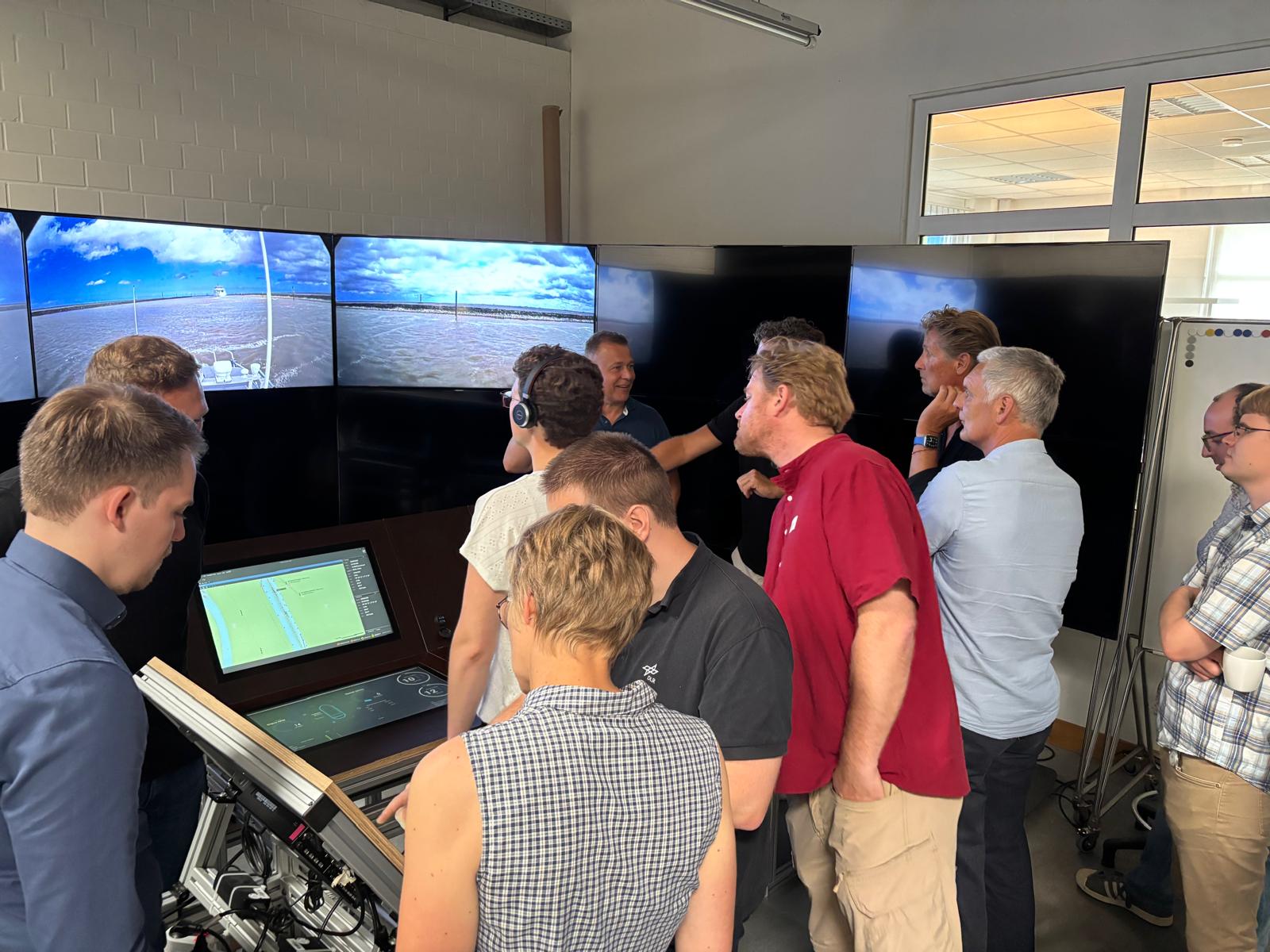
Recently, the consortium gathered at DLR in Oldenburg. The meeting took place at the test center for mobility systems of the future. Within the project, FME and Mariko act as project leads and have since become well-attuned to one another.
Interim results and live demonstration
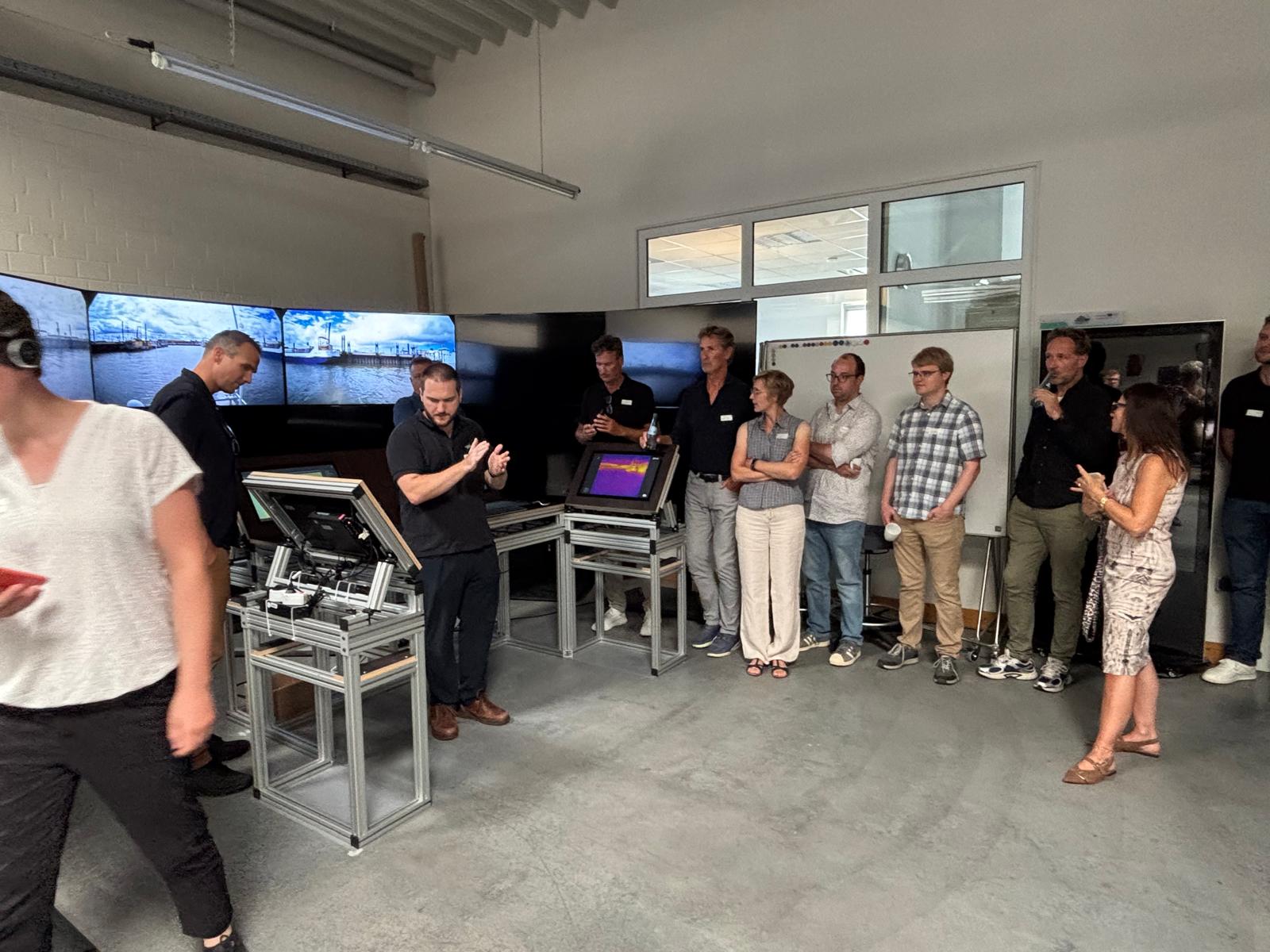
The meeting was dedicated to the midterm of Ferry Go!. The goal was to update all project team members and partners on the interim progress. In addition, a special demonstration was on the program.
Those present were able to experience a live demo of remotely controlling a DLR test vessel from Oldenburg.
During the meeting, results and developments in various fields were presented.
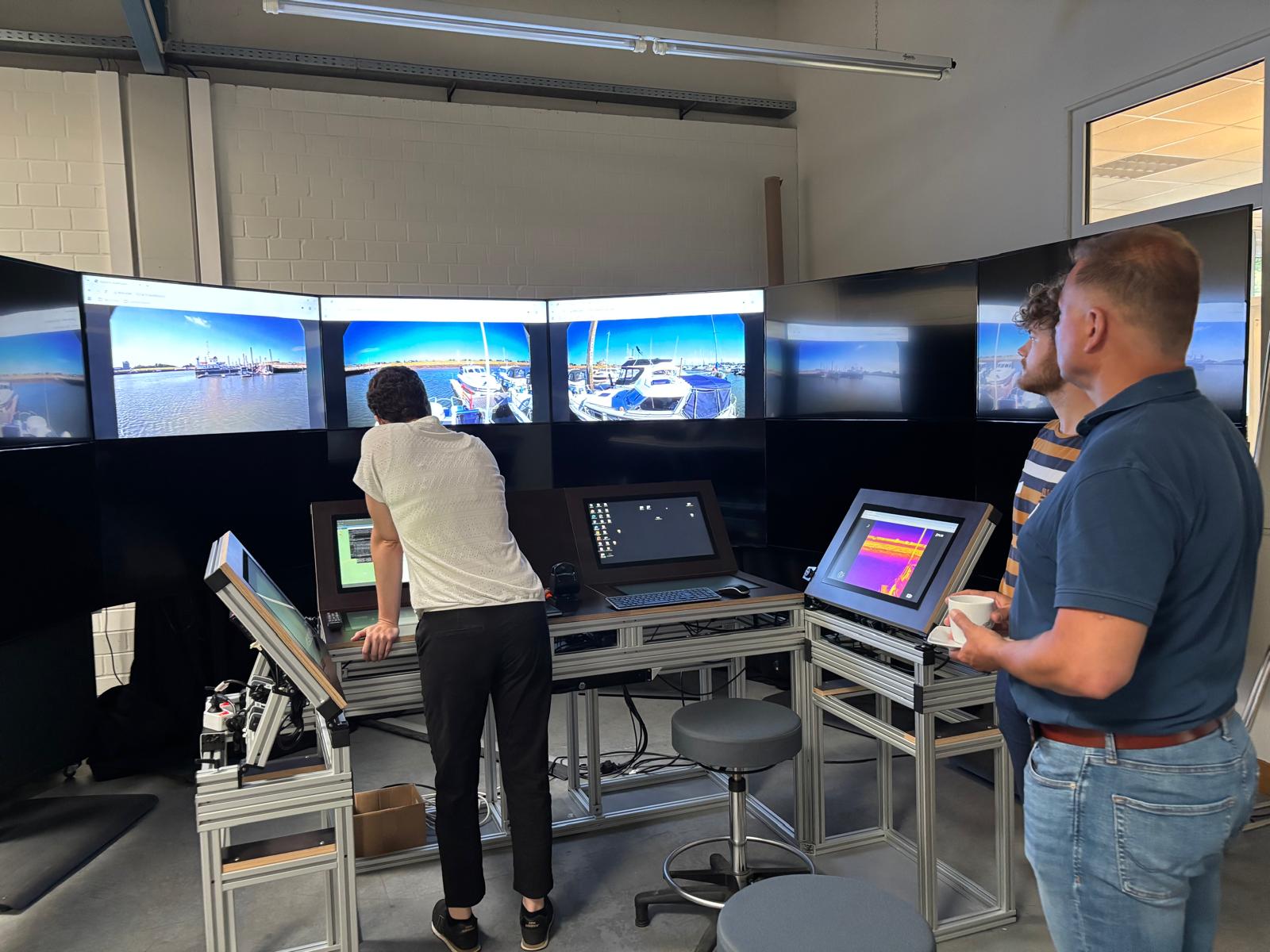
To steer a vessel from the shore
An important component is the interaction between the shore-based operator and the remote system. In this context, research is being conducted into how this collaboration works precisely. It is also examined which functions are currently available and which are still being further developed.
In addition, safety on the Wadden Sea plays an important role. After all, there are all kinds of objects and water users on the water. Think of boats, canoes, buoyage, and swimmers. Not all of these objects are equipped with AIS.
Therefore, research is being conducted into how these objects can be detected even under less-than-ideal conditions. Think, for example, of fog, twilight, and night. Advanced sensoring plays an important role in this. This requires reliable observation of what is surrounding a vessel at both greater distances and close proximity.
Visual intelligence and predicting navigation routes
Visual intelligence is also an important component of the developments within Ferry Go!. With increasingly better algorithms, the certainty with which boats, canoes, buoyage, and swimmers are recognized must be further increased.
That requires a lot of data. Among other things, the project partners are investigating how this data is built up and how deviations, or anomalies, can be recognized.
Additionally, the application of aviation trajectory predictions to the maritime sector is being examined. Such predictions allow potential collisions and other unsafe situations to be detected and prevented earlier.
Data as a basis for safer navigation
Another important issue is how the large amount of data generated on board can be used optimally.
Sensors and ship data continuously generate information. This data can be retrieved and processed to perform calculations and provide advice. In this way, a helmsman or operator can be supported in taking corrective action.
This brings together various technologies: sensing, data processing, visual intelligence, and Human Machine Interfacing.
Impressive demonstration on the Wadden Sea
The highlight of the midterm was the live demonstration with the DLR research vessel.
The ship departed from the port of Norddeich towards the Wadden Sea island of Norderney. The special factor: the vessel was remotely controlled from Oldenburg.
An impressive demonstration showing that autonomous and remote sailing is not just a development for the future. Technologies required for this can already be applied and demonstrated today.
ICD is monitoring developments within Ferry Go!
In the second half of the cross-border Ferry Go! project, the ICD will also continue to monitor developments and newly developed technology. The collaboration between Dutch and German companies and knowledge institutions demonstrates how many opportunities arise when expertise in the fields of high-tech, data, sensoring, and maritime technology is brought together.
The ICD wishes all partners much success with the continuation of Ferry Go!